
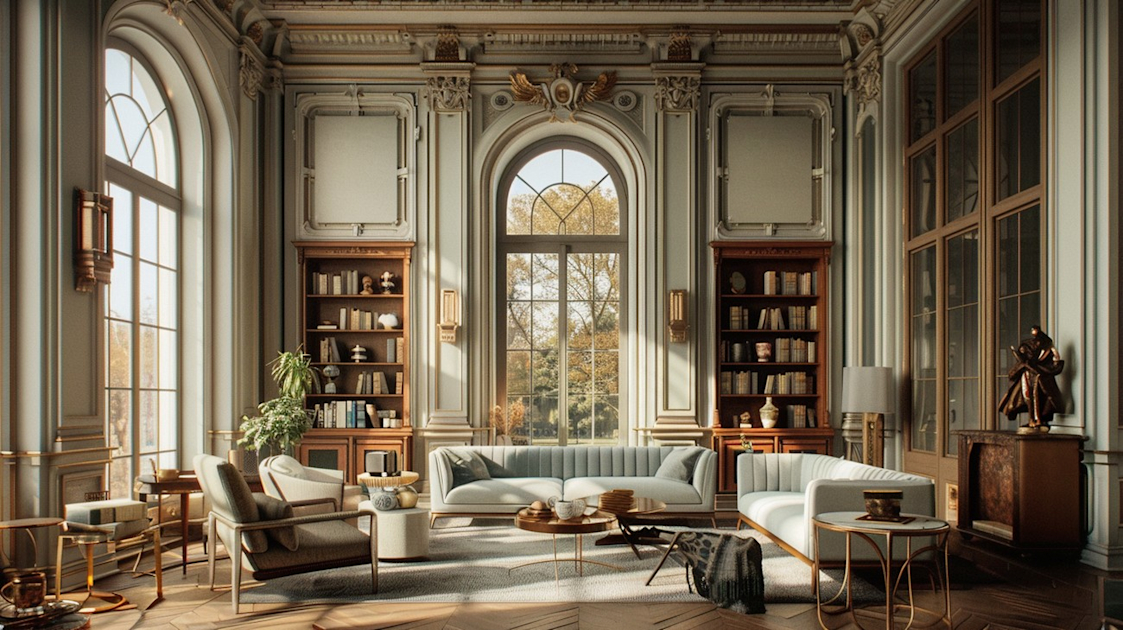


Georgian architecture is a classic and timeless style that emerged in the early 18th century and continued to influence design sensibilities well into the 19th century. Known for its symmetrical layout and stately demeanor, Georgian architecture embodies a sense of grandeur and elegance. In this comprehensive article, we delve into the nuances of Georgian architecture interior design, uncovering its historical significance, characteristic elements, and contemporary applications.
The Origins of Georgian Architecture
Georgian architecture takes its name from the reigns of the British Kings George I through George IV (1714-1830). This period saw significant developments in design and architecture, characterized by a move towards harmony, proportion, and balance. The style was heavily influenced by the classical architecture of Ancient Rome and the Italian Renaissance, reflecting the ideals of order and symmetry.
Key Influences and Inspirations
- Classical Roman and Greek Architecture: The use of columns, pediments, and symmetry harkens back to these ancient styles.
- Palladianism: Inspired by the work of the Italian architect Andrea Palladio, emphasizing symmetry and proportion.
- Patterns and Textures: Influences from the Rococo and Neoclassical movements are visible in the ornate detailing.
Characteristic Features of Georgian Interiors
Georgian interior design is easily recognized by several distinguishing features that not only speak of its historic roots but also provide elegance and sophistication.
Symmetry and Proportion
Central to Georgian design is a deep commitment to symmetry and proportion. This extends to everything from the layout of rooms to the placement of furniture and decorative elements. The balanced distribution of space is a hallmark of the Georgian aesthetic.
Use of Classical Elements
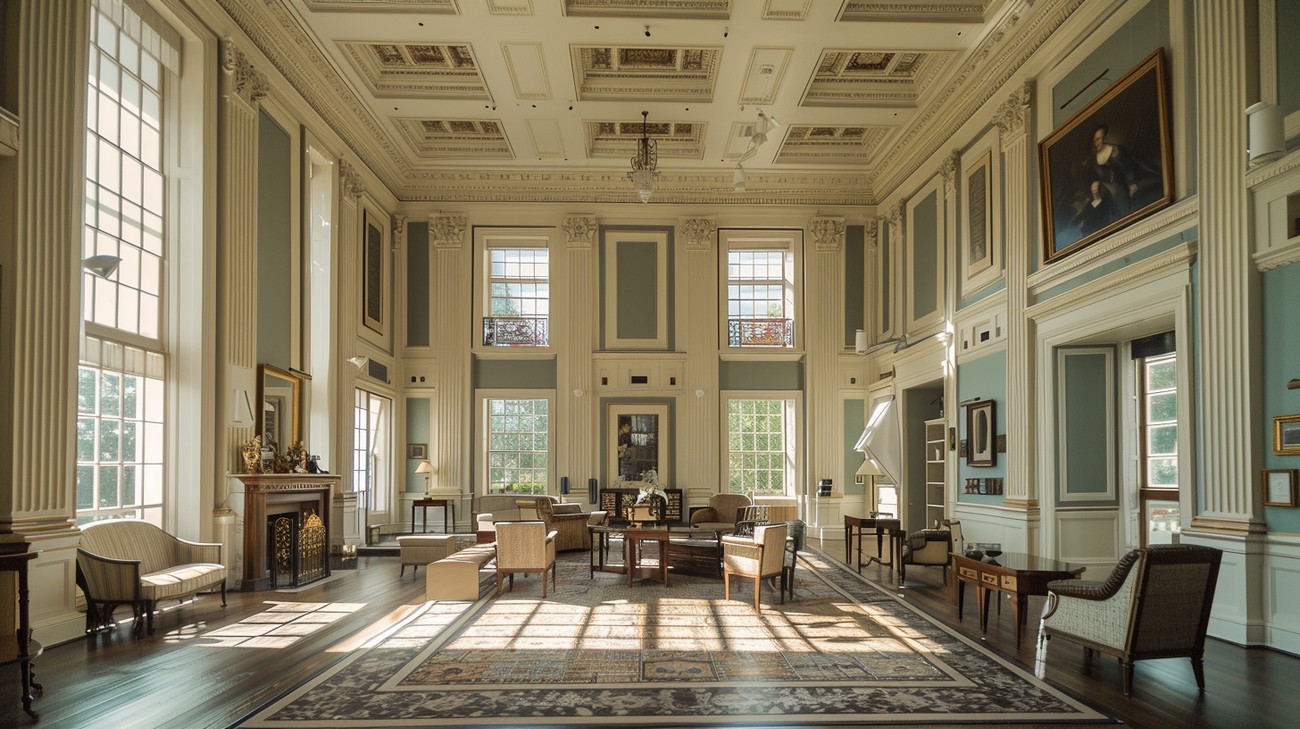
- Columns and Pilasters: Structural and decorative use of columns adds grandeur and a sense of classical antiquity.
- Mouldings and Wainscoting: Decorative mouldings and paneling add depth and sophistication to walls, often highlighted with subtle paint colors.
Color Palette
The Georgian color palette typically involves muted tones. Soft, chalky pastels like light blues, sage greens, and gentle peaches create a sense of calm and elegance.
Decorative Elements
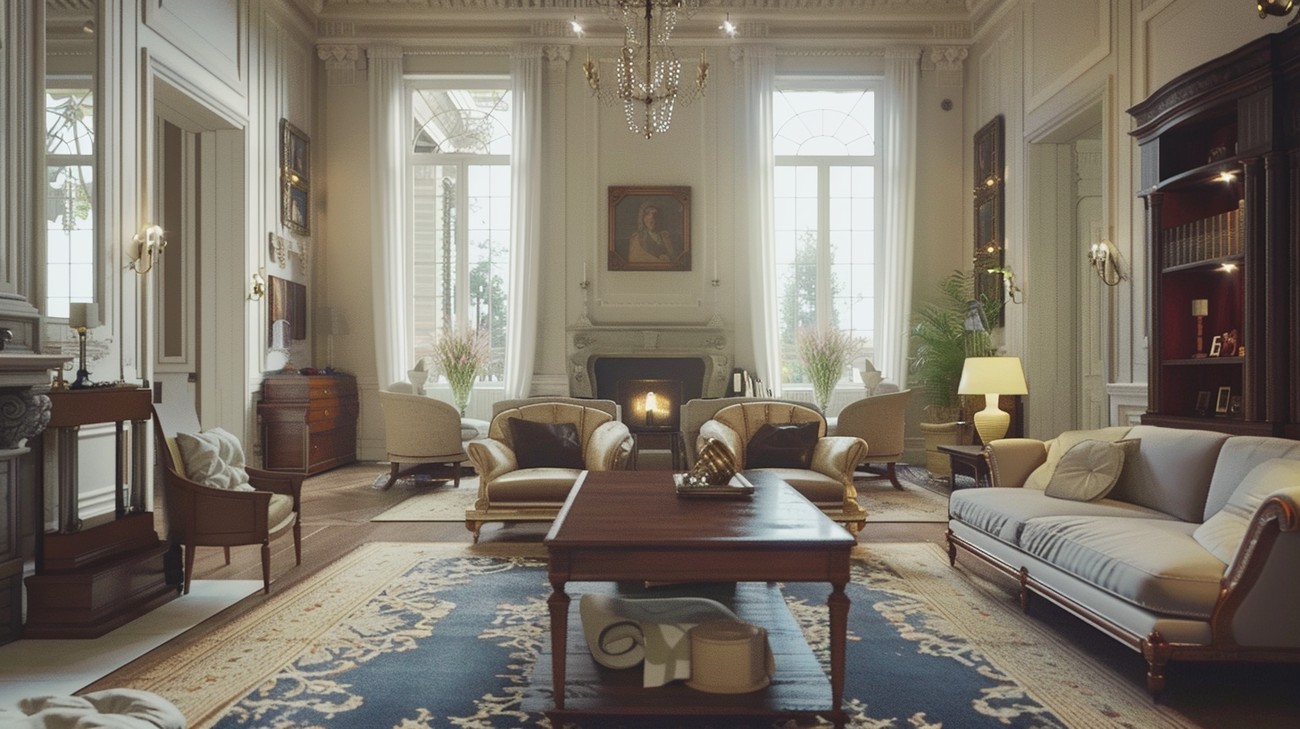
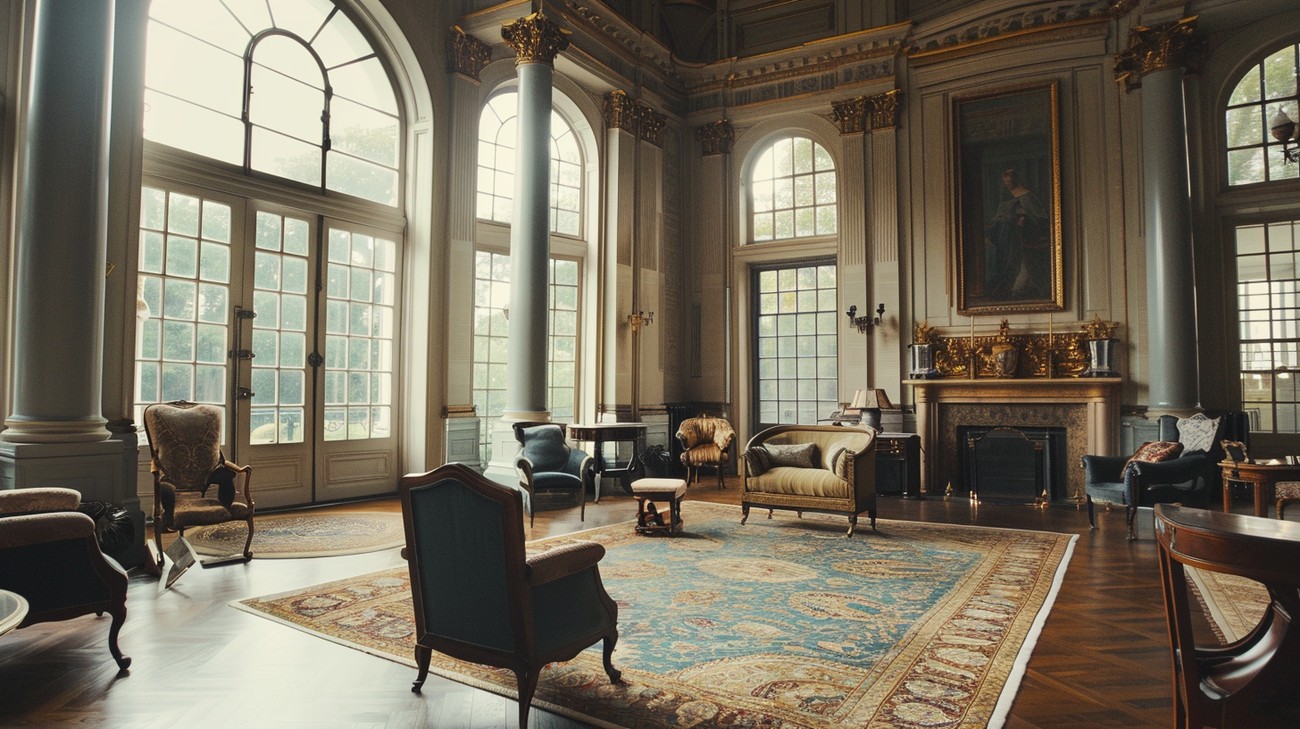
- Fireplaces: Often the focal point of a room, Georgian fireplaces are grand, with intricate mantels and surrounds.
- Chandeliers: Elegant lighting fixtures made of crystal or glass illuminate spaces with sophistication.
Flooring
- Wooden Floors: Polished wooden floors are standard, often featuring intricate designs or patterns.
- Rugs: Ornate rugs add warmth and a touch of luxury.
Furniture in Georgian Design
Furniture in Georgian interiors reflects the design sensibilities of the era with its elegance and functionality.
Characteristics of Georgian Furniture
- Materials: Rich woods such as mahogany and walnut are commonly used, finished to a high sheen.
- Upholstery: Luxurious fabrics like velvet and silk are popular, often adorned with intricate patterns.
- Design: Clean lines combined with delicate carvings and inlays.
Essential Furniture Pieces
- Chairs and Sofas: Feature cabriole legs and claw-and-ball feet.
- Sideboards and Cabinets: Often embellished with ornate detailing and brass hardware.
Decorative Accents and Accessories
The finishing touches in a Georgian interior design are critical to achieving the authentic look.
Mirrors and Paintings
Large mirrors with gilded frames and classical paintings depicting landscapes or historical scenes are common.
Ceramics and Porcelain
The use of fine china and porcelain as decorative objects adds a touch of refinement. Blue and white patterns are particularly popular.
Curtains and Drapery
- Heavy Drapes: Made from luxurious fabrics, often featuring tassels and tiebacks.
- Pelmet and Valance: Enhances the window treatment with a structural frame.
Modern Adaptations of Georgian Design
While rooted in history, Georgian architecture interior design can be adapted to meet contemporary tastes. Today's designers often blend traditional elements with modern touches to create spaces that honor the past while moving with the times.
Balancing Tradition and Modernity
- Open Spaces: Integrating open-plan layouts while maintaining classic details.
- Minimalist Touches: Pairing classic elements with minimalist decor to avoid overcrowding.
- Sustainable Materials: Using eco-friendly and sustainable materials in keeping with today's green standards.
Adapting to Contemporary Needs
- Integrated Technology: Seamlessly incorporating modern technology without disrupting the aesthetic harmony.
- Functional Spaces: Designing multi-purpose areas to accommodate modern lifestyles.
Designing Your Own Georgian-Inspired Space
Ready to embark on creating your own Georgian-inspired interior? Here are some practical tips to get started.
Steps to Achieving the Look
- Start with a Neutral Base: Establish a foundation with muted, soft tones on walls and floors.
- Add Classical Elements: Incorporate columns, wainscoting, and decorative mouldings.
- Select Period Furniture: Choose pieces that reflect Georgian elegance and style.
- Emphasize Symmetry: Arrange furniture and decor to maintain balance.
- Accessorize Thoughtfully: Use mirrors, chandeliers, and artwork to enhance the space.
Frequently Asked Questions about Georgian Architecture Interior Design
How did Georgian architecture influence interior design?
Georgian architecture, flourishing from 1714 to 1830 during the reigns of the first four British monarchs of the House of Hanover, profoundly influenced interior design with its emphasis on symmetry, balance, and proportion. This architectural style translates into interior spaces that exhibit a sense of grandeur through high ceilings, large windows, and generous use of decorative elements like moldings and cornices. The interiors often mirror the exterior's elegance, capturing the essence of classical architecture with columns, pilasters, and intricately crafted woodwork. Overall, Georgian architecture sets the stage for interiors that exude timeless sophistication and artistic refinement.
What are the key characteristics of Georgian interior design?
Georgian interior design is characterized by its symmetry, elegant proportions, and attention to detail. Key features include high ceilings, large sash windows, and understated yet rich color palettes with hues like soft blues, sage greens, and muted pinks. Walls are often adorned with wood paneling or elegant moldings, while fireplaces serve as central focal points. Furniture and decor are crafted for refinement and grace, frequently incorporating materials such as mahogany and walnut. Chandeliers, mirrors, and textiles like brocade or damask enhance the opulence typical of Georgian interiors.
Which materials are commonly used in Georgian architecture interior design?
In Georgian architecture interior design, materials are chosen for their quality and refinement. Rich woods like mahogany, oak, and walnut are routinely used for furniture, flooring, and paneling, giving spaces a warm and inviting feel. Stone and marble feature prominently in fireplaces and kitchens, while plasterwork is employed for intricate ceiling designs and wall moldings. Fabrics such as silk, damask, and brocade for curtains, upholstery, and drapery add to the sumptuous atmosphere of Georgian interiors, creating an environment that is as durable as it is beautiful.
How can I incorporate Georgian design elements into a modern home?
Incorporating Georgian design elements into a modern home involves blending classical features with contemporary style. You can introduce symmetry and formal balance by positioning furniture and art in harmonious arrangements. Use color palettes that combine Georgian-inspired hues like soft whites and pastels with modern accents. Decorative moldings or wainscoting can lend a Georgian touch to modern walls, while selecting classically inspired, high-quality furniture can echo the elegance of the era. Finally, consider adding traditional light fixtures or mirrors for a nod to Georgian sophistication while maintaining a modern aesthetic.
Are there specific color schemes associated with Georgian interiors?
Yes, Georgian interiors are renowned for their subtle and refined color schemes. The palette typically features muted shades and earth tones, including soft blues, dusty pinks, muted greens, and warm grays. These colors were originally achieved with natural pigments and were meant to mimic the hues found in nature. They are often paired with white or cream for contrast, especially in moldings and trims. These gentle color schemes not only highlight the symmetrical and balanced design but also create an atmosphere of calm elegance suitable for Georgian architecture interior design.
What role do textiles play in Georgian architecture interior design?
Textiles in Georgian architecture interior design serve both functional and decorative purposes. Fabrics such as silk, damask, brocade, and velvet are commonly used for curtains, upholstery, and cushions, adding warmth and richness to the interiors. These textiles typically feature intricate patterns and tend to complement the understated color schemes found in Georgian design. By incorporating luxurious fabrics, designers can create layers of texture and visual appeal, enhancing the genteel and sophisticated atmosphere that is synonymous with Georgian interiors.
How important are fireplaces in Georgian architecture interior design?
Fireplaces play a central role in Georgian architecture interior design, often serving as the focal point of a room. Crafted from stone or marble, they embody the elegance and grandeur of the Georgian era. The mantle and surround are typically decorated with intricate moldings or carvings, sometimes even integrating classical motifs. Affording both practicality and beauty, fireplaces provided necessary warmth and light to Georgian homes. Today, they continue to offer cozy centers for gathering, enhancing the timeless appeal of Georgian-style interiors.
Can Georgian architecture interior design be adapted for small spaces?
Absolutely, Georgian architecture interior design can be adapted to smaller spaces with a few strategic modifications. Emphasizing symmetry and proportion is still possible with careful furniture placement and strategic use of mirrors to expand perceived space. Opt for lighter color schemes to create an airy feel, and choose streamlined versions of classical furniture to prevent overcrowding. Utilizing vertical space with high shelves or tall curtains can also give the illusion of more generous room proportions, allowing small spaces to retain the elegance and sophistication characteristic of Georgian design.
What are some common furniture pieces found in Georgian interiors?
Common furniture pieces in Georgian interiors include elegant and functional items crafted from fine woods like mahogany and walnut. Wingback chairs, cabriole-legged tables, and breakfront bookcases are characteristic examples. Georgian furniture often showcases exquisite craftsmanship, with intricate carvings and graceful proportions. Upholstered furniture features rich textiles such as velvet and brocade. These pieces are designed to exhibit both beauty and comfort, aligning with the Georgian interior design's emphasis on refined elegance and practical luxury.
Exploring the Pros and Cons of Georgian Architecture Interior Design
Pros
Timeless Elegance
Imagine stepping into a space that immediately envelops you in a sense of history and sophistication. That's the allure of Georgian architecture. This design style epitomizes timeless elegance with its symmetrical layouts, classic proportions, and refined aesthetic. It’s like living in a Jane Austen novel! The balance and harmony inherent in these designs can lend any space a stately and serene ambiance.
Versatile Decor Potential
Whether you're a fan of minimalist decor or prefer a more extravagant approach, Georgian interior design can be quite accommodating. With its neutral color palettes and reliance on symmetry, you have the flexibility to incorporate both antique furnishings and subtle modern accents to create a unique blend that reflects your personal style. It’s an ideal playground for anyone who loves to mix and match.
High-Quality Craftsmanship
Georgian interiors are often characterized by their emphasis on high-quality craftsmanship. Think intricate moldings, detailed cornices, and skilled woodwork. These elements not only add to the overall beauty of the space but also speak to the durability and investment in quality materials. It’s an invitation to appreciate the artistry of the construction itself!
Natural Light
Large sash windows are a hallmark of Georgian design, optimizing natural light and offering great views of the surroundings. This feature helps to make spaces feel open and airy, a plus for both ambiance and mood. It's all about creating a bright, cheerful environment that welcomes you in.
Focal Points Through Fireplaces
Unlike many modern designs, Georgian architecture often includes fireplaces as a central feature in the room layout. These aren’t just for keeping warm; they serve as a beautiful focal point around which you can arrange furniture and design elements. It naturally draws people together, favoring both conversation and cohesion.
Cons
Costly Renovations and Maintenance
Any lover of Georgian design must be prepared for potentially significant upkeep costs. The intricate details that make these spaces so beautiful also require meticulous maintenance. Renovations to preserve the authenticity can be costly, primarily due to the necessity for specialized craftsmen and materials replicating the quality of the original work.
Accessibility and Space Constraints
These homes were built for different eras and lifestyles, which means they can sometimes struggle to meet modern needs. Narrow hallways, small kitchens, and a lack of storage space are common issues. It might mean compromising on some of the comforts of modern living unless you're willing to invest in sympathetic updates.
Limited Energy Efficiency
Despite the charm of large sash windows, solid walls, and high ceilings, these features often contribute to poor energy efficiency. Heating a Georgian-style interior can become a costly endeavor, as older buildings tend to lack the insulation standards found in more contemporary structures.
Restrictive Planning Regulations
If your Georgian home is listed, any alteration— no matter how small— might require permission from preservation authorities. This can be a double-edged sword: while it preserves the character of historic buildings, it can also restrict how you adapt your space to better fit your lifestyle.
Potential for Design Restraints
While Georgian architecture has a classic look, playing within the confines of its traditional aesthetic might not suit everyone. If you’re someone who loves bold, trending design, the restrained color palette and formal layout might feel limiting. Embracing this style requires a true appreciation for its historical flair.
Final Thoughts
Embracing the elegance and timeless charm of Georgian Architecture Interior Design can truly transform your home into a sophisticated retreat. By harmonizing classic elements with modern comforts, you can create spaces that not only reflect your personal style but also stand the test of time. Whether it's choosing the right colors, furnishings, or architectural details, the key is to capture the essence of this beautiful design aesthetic.
For those of us in Sacramento, CA, we understand the unique character of our neighborhoods and how Georgian styles can enhance them. If you're ready to bring your vision to life, we invite you to connect with us at HouseIdea. Our team is here to guide you through every step of the design process, ensuring your home becomes a stunning representation of Georgian elegance. Let's get started on your dream space!
Tags: Georgian, Architecture, Interior Design,